
A regional HVAC company running several profitable Search campaigns has used Google Ads broad match and automatically created assets for months. In September 2026, the team opens Google Ads and finds those settings managed inside Google Ads AI Max. Their campaigns still exist, but the system can now match more searches and create more messages around each searcher’s intent.
That example explains why the coming change matters. AI Max Search campaigns are not replacing Search campaigns with a new campaign type. Google is moving some older settings into a wider AI layer that can affect targeting, ad copy, and landing-page selection. A business that waits until the upgrade happens may keep serving ads, but it may not know which controls are active or where new traffic is coming from.
For teams working on Google Search Ads 2026 plans, the task is not to reject automation or turn on every option without review. The safer move is to understand what Google Ads AI reads, check the account settings that will carry over, and improve the source material the system will use.
What Is Google Ads AI Max?
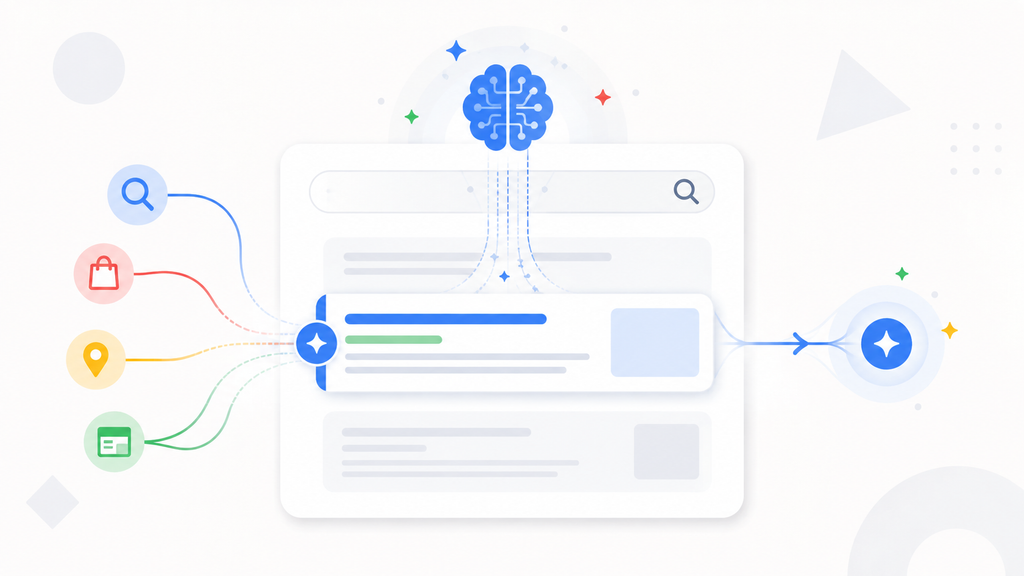
Google Ads AI Max is a set of targeting and creative features built into Search campaigns. Google describes it as an ongoing layer within the campaign. It uses campaign signals, keywords, ads, landing pages, and real-time search context to decide when an ad may be relevant and which message may fit the query. The core tools cover search term matching, text customization, and final URL expansion. Google’s AI Max documentation also lists brand settings, locations of interest, URL controls, and updated reporting.
AI Max vs. a new campaign type
The name can make AI Max advertising sound like a replacement for standard Search. It is not. Advertisers continue to create and manage Search campaigns, ad groups, responsive search ads, budgets, bidding strategies, and conversion goals. AI Max sits inside that setup as an optional feature suite, although Google will switch it on for certain eligible campaigns during the September 2026 upgrades.
How AI Max works with Search campaigns
Inside the campaign, search term matching can use broad match and keywordless technology to find queries beyond the existing keyword list. Text customization can create extra headlines and descriptions from the domain, landing page, current ads, and ad-group keywords. Final URL expansion can send a click to a different page on the same domain when Google predicts that page is more useful for the query.
Turning on the main AI Max setting enables search term matching, text customization, and final URL expansion, but advertisers can review and adjust the related controls. You can change search term matching at the ad-group level. Text customization and final URL expansion sit at campaign level, and final URL expansion depends on text customization because the ad message must fit the selected page.
What Is Changing in September 2026?
Google’s current schedule is narrower than some early reports suggested. According to the company’s updated April 2026 announcement, automatic upgrades will begin in September 2026 for eligible Search campaigns using automatically created assets or the campaign-level broad match setting. Google expects the eligible upgrades to finish by the end of September. The Dynamic Search Ads transition was moved to February 2027.
Broad match campaign upgrades
One group affected is advertisers using the campaign-level broad match setting. This is not the same as having a few broad match keywords in a campaign. The campaign-level setting makes the campaign use broad match exclusively and requires conversion-based Smart Bidding. During the upgrade, Google says AI Max will be enabled with search term matching on by default.
Text customization upgrades
A second group includes campaigns using text customization, the feature formerly called automatically created assets. Google says these campaigns will move into AI Max with search term matching and text customization enabled by default. Text customization can generate extra responsive search ad headlines and descriptions from the advertiser’s own inputs. Google’s text customization guidance says the source context includes the domain, landing page, current ads, and keywords.
The upgrade does not mean every AI Max feature will automatically use its broadest setting. Google’s stated goal is to mirror the legacy setup. Advertisers should still open each affected campaign and confirm whether final URL expansion, brand controls, and other options match the account’s actual needs.
Which advertisers could be affected?
This is not an automatic conversion of every Search campaign. The September group is tied to the two legacy settings above. Accounts with only ordinary exact, phrase, or individual broad match keywords are not automatically included for that reason alone. Google also says it will send account notifications before eligible campaigns move.
How AI Max Changes Keyword Targeting
Search intent versus exact keyword targeting
Exact keywords are useful when a business wants tight coverage around a known term. Search behavior is less tidy when a buyer describes a problem, compares options, or asks a long question. AI Max can use keywordless matching to connect some of those searches with an offer, even when the account does not contain the same wording.
That wider reach can uncover demand, but semantic similarity is not the same as commercial value. A query may relate to the service and still come from a student, job seeker, existing customer, or person outside the service area. Conversion data, search-term review, and clear campaign goals remain necessary because Google Ads AI needs good feedback about which outcomes count.
Broad match and Google’s AI systems
Google Ads broad match already considers signals beyond the literal keyword. AI Max adds keywordless matching and uses information from ads and landing pages to extend that process. Google reports that the search terms view can show whether an incremental match came from broad match expansion or keywordless matching. This source detail gives advertisers a better way to separate the two when reviewing performance.
Where advertiser control still matters
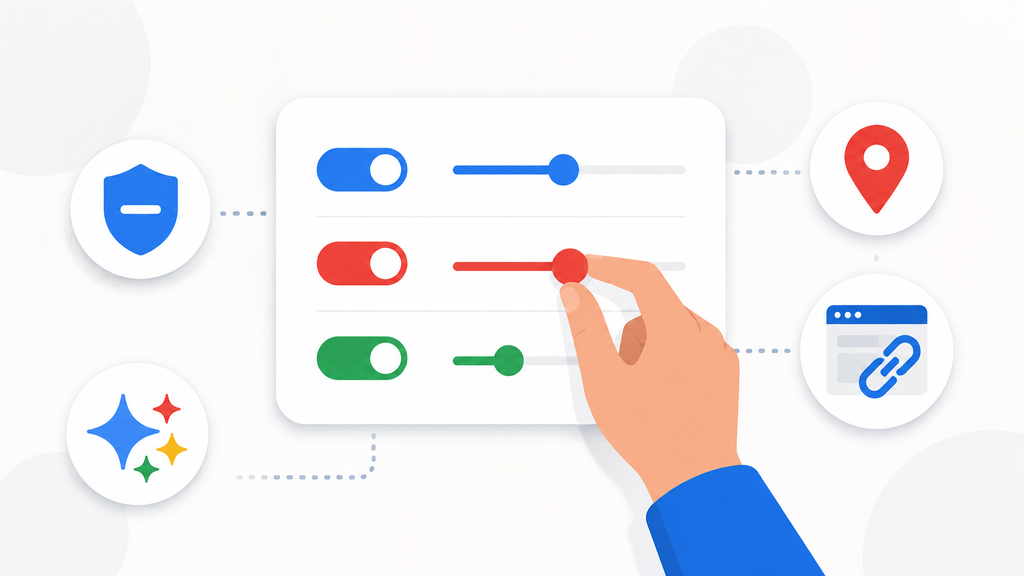
Wider matching does not remove the need for guardrails. Negative keywords can block clearly unwanted searches. Brand inclusions can keep certain ad groups tied to named brands, while brand exclusions can prevent unwanted associations. Locations of interest can guide keywordless matches based on geographic intent. URL inclusions and exclusions can narrow which pages AI Max may use.
Your Landing Pages Matter More Under AI-Driven Advertising

A landing page is no longer only the destination after the click. Under Google Ads AI, it can help shape targeting, generated copy, and page selection. Thin, outdated, or mixed-purpose pages can give the system weak clues before a visitor ever sees the site.
Google uses landing-page context
Text customization reads landing-page titles, descriptions, meta tags, visible copy, and other eligible sources. Search term matching can also learn from URLs, while final URL expansion can choose a different relevant page from the domain. Google says customized assets are grounded in the advertiser’s offerings and reviewed as source content changes.
Clear product and service positioning
Vague pages create avoidable uncertainty. A page that says a company offers ‘complete solutions for every need’ gives Google and the buyer little to work with. A stronger page states what is sold, who it is for, where it is available, what makes the offer different, and what the visitor should do next.
Matching landing pages with buyer intent
Suppose a software company has separate pages for pricing, enterprise security, product integrations, and free trials. Sending every query to the homepage wastes those differences. Final URL expansion may route a security-focused search to the security page, but that only helps if the page answers the concern and offers the right next step.
Ad Copy in the AI Max Era

Human-written assets versus generated assets
Responsive Search Ads still use advertiser-written headlines and descriptions. When text customization is active, Google can add customized assets and choose a combination predicted to fit the query. Google says a generated asset will serve only when it is predicted to perform better than the uploaded option, but advertisers remain responsible for checking accuracy and policy compliance.
Generated assets should be judged on more than click-through rate. Review lead quality, conversion rate, cost per qualified action, revenue where available, and the search terms that produced the result. A line that attracts more clicks can still be poor copy if it suggests a discount, location, feature, or outcome the business does not offer.
Giving Google stronger source copy
Strong source copy gives the system fewer chances to guess. Responsive search ads should cover the product or service, a real point of difference, relevant proof, and a direct next step. Landing pages should repeat those facts in natural language rather than hiding them in images or vague slogans. Page titles and meta descriptions also need to match the live offer.
Protecting brand messaging
Brand protection needs written rules and active review. Text guidelines can tell Google to avoid certain terms, concepts, or tones. Brand inclusions and exclusions address where the ad may match, while URL controls address where the click may land. These controls solve different problems and should not be treated as substitutes for one another.
Use the asset details and combination reports to see what Google created and what served. Remove a generated asset when it is inaccurate or off-brand. The AI Max reporting guidance also recommends allowing at least two weeks after enabling AI Max before routine changes such as adding negative keywords, so the system has time to learn. Serious legal, safety, or brand problems should still be handled at once.
What Advertisers Should Review Before September

Start with campaign identification. Find every Search campaign using the campaign-level broad match setting or text customization, including accounts where the older automatically created asset name still appears. Record the current settings and note which campaigns Google says are eligible for the September upgrade.
Capture a usable baseline next. Save recent search-term, match-type, landing-page, asset, conversion, CPA, and ROAS data where those measures apply. Check whether brand and non-brand traffic are separated in a way that supports clear reporting. Without a baseline, normal changes in demand can be mistaken for an AI Max effect.
Audit the measurement setup before asking the system to expand. Primary conversions should represent real business value, duplicate actions should be removed, and offline lead outcomes should be returned to Google when the sales process allows it. Review Smart Bidding targets and budget limits because AI cannot correct a goal that rewards the wrong action.
Read the site as Google may read it. Update weak titles, meta descriptions, service details, prices, location statements, and calls to action. Build or improve pages for important buyer intents. Add URL exclusions for pages that should never receive paid traffic and use URL inclusions when a campaign needs a defined content set.
Conclusion
Check creative controls before generated copy starts serving more widely. Keep strong advertiser-written assets, review text guidelines, and decide which words or claims the system must avoid. Confirm brand and location controls at campaign and ad-group level. Set a weekly review for search terms, landing pages, generated assets, and lead quality during the first month after the change.
A voluntary test can answer more than a last-minute switch. Google offers AI Max experiments, and new testing and planning tools announced in August 2026 are scheduled to expand in September. Use a controlled test with agreed conversion and value measures, then compare useful outcomes rather than traffic alone.
The September deadline is really an account-audit deadline. Businesses do not need to hand every decision to Google Ads AI, but they do need to know which legacy settings will move, what data guides the system, and which pages and messages it may use. Review those inputs now, while there is still time to test and correct them before the automatic upgrades begin.